
Berlin
Lessons for America from across the Atlantic

I had a chance to spend a few days in Berlin last week at the invitation of the German Social Sciences organization WZB who had organized a conference on democracy. Amy joined me for the trip, which also included a town hall with American expatriates and one on one meetings with German politicians and political scientists.
It’s one thing to consider the rise of fascism, authoritarianism and the possible collapse of our constitutional republic while we’re organizing in Texas. It’s something else altogether to think about these challenges as you walk through a city that lived it and is now almost desperate to tell the tale.
Amy and I spent an afternoon in the Topography of Terror Museum, situated in what was once the nerve center of the Nazi regime. We learned from the exhibit’s personal stories, powerful photographs and recovered documents the path Germany took more than 90 years ago from a deeply flawed democracy whose hapless legislators presided over a fractured, ineffectual government to a highly organized police state that was able to unleash death and destruction unmatched in all of human history.
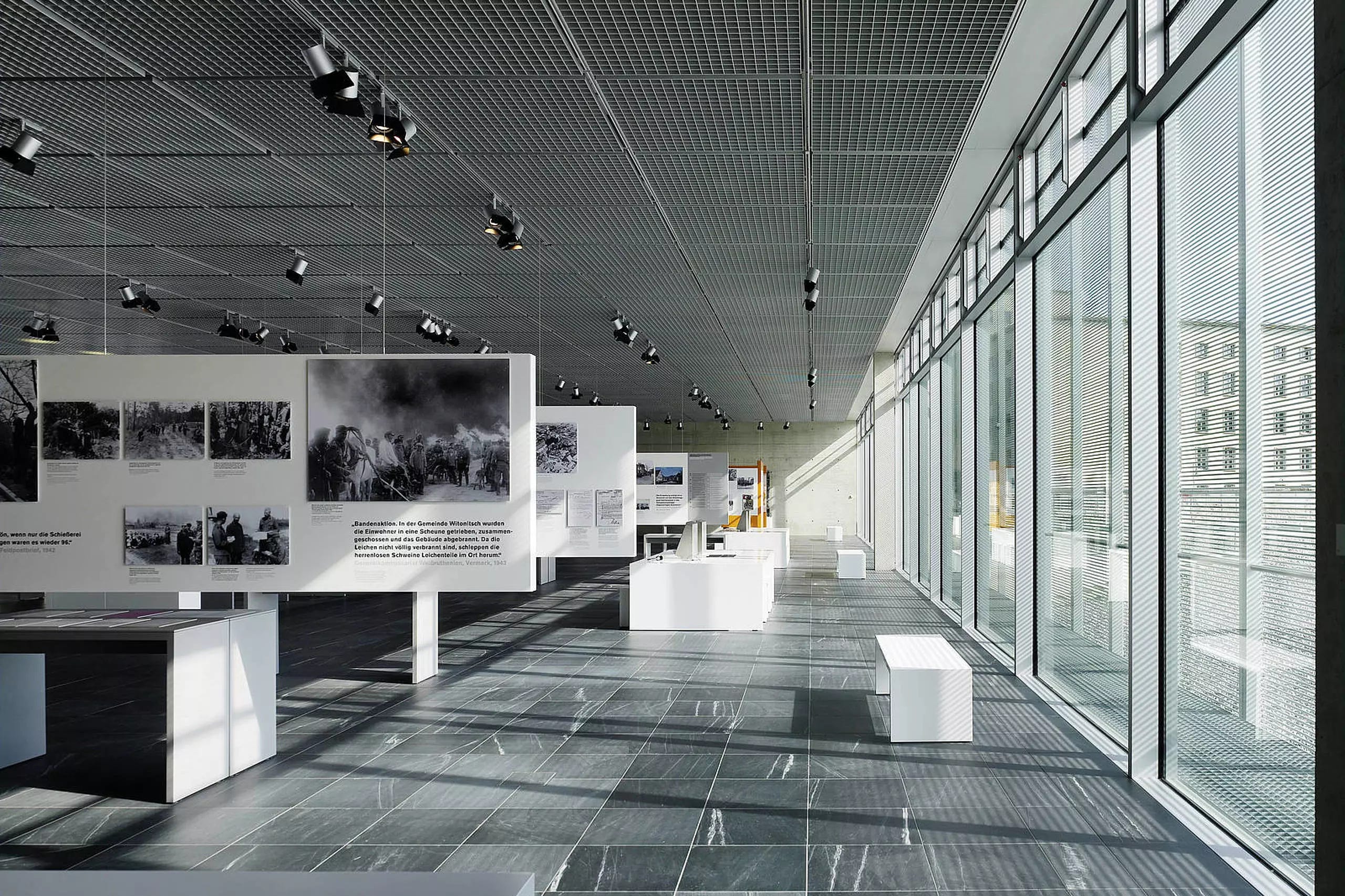
I thought I understood from history books and documentaries, as well as healthy doses of Timothy Snyder and Daniel Ziblatt, Germany’s descent into genocidal fascism. But the museum’s ability to visually bring home the speed and force with which Hitler commanded power, the acquiescence of major political parties and traditional centers of German civil society, the reaction from everyday Germans – from euphoria, to fear, to stubborn resistance – was stunning and deeply disturbing.
Scenes of rabbis pilloried in the public spaces of Berlin; opposition politicians paraded down its streets on their way to “protective custody;” a crush of women pressing towards a stage to reach Hitler’s outstretched hand; a man crossing his arms in silent protest as every other person around him salutes the Fuhrer.
I wondered as I looked at each scene of injustice, dragging Germany deeper into terror: Why didn’t more people rise up?
If history doesn’t perfectly repeat, but instead rhymes, this looked and felt like the verse that might precede our own 80 years earlier in the same terrifying song.
Topography of Terror does a masterful job of documenting how the Nazis systematically exploited a deeply damaged democracy, a demoralized German public and a craven political and business elite. And as an American you cannot help but draw the parallels. The speed and confidence with which the National Socialists defied the German constitution, the impunity with which they acted, their contempt for democracy, their fetish for cruelty (“Nazi terror unfolded in the public eye to spread paralyzing fear”) and their rejection of civilization in favor of barbarism (as if only might makes right) all connect with what is happening in America right now.
That’s not to say that today’s America is in every way the same as Germany of 1933. Of course it isn’t. And though Trump and Vance will protest too much when any reference is made to this obvious touchstone for their administration, no serious person would say that it is.
But the whole point of the museum – and to some significant degree, of Germany’s existence over the last 80 years – is to warn the world what can happen when a charismatic authoritarian attempts to blow past the constitutional limits of a democracy; to allow us to learn from the epic failures of the Weimar Republic; to help us understand how it can happen and perhaps how it can be stopped. Otherwise, were these lessons learned at the cost of its millions of victims only in vain?
Fascist Germany may be the analogy of last resort. But tell me, after nine defining months of this administration, led by a man who promises to be a dictator, who attempts to govern like one and who, among other chilling allusions to National Socialism, refers to immigrants “poisoning the blood of America,” what other resort do we have?
To be clear, Trump is not Hitler. MAGA is not Nazi. But Trump, like Hitler, is an authoritarian demagogue attempting to fuse the identity of the state with his own, to use the military and police coercively to deter dissent and democracy, to weaponize prosecutions and courts to persecute his political enemies, to focus grievance on certain groups (immigrants, Democrats, Muslims, the press) and blame them for the country’s problems, and to seek to rig the electoral process to ensure his own and his party’s perpetual reelection.
The comparison is useful because it allows us to see that something like America’s current challenges have happened before. And because we can study that history, we can learn from it and avert its worst mistakes. (Read, for example, “How Hitler Dismantled a Democracy in 53 Days”.)
German history teaches us that a dictator can come to power through democratic elections and then, once in power, use the very levers of democracy to destroy it from within.
“There was a very widespread sense of release and liberation from democracy,” read the text next to a photo of Germans enthusiastically celebrating Hitler’s ascension to the chancellorship. “What is a democracy to do when the majority of the population no longer wants it? There was a desire for something genuinely new: popular rule without parties, a popular leader figure.”
As Trump and his deputy Stephen Miller use the bully pulpit — the biggest microphone in the world — to work the fiction that Democrats are a “domestic extremist organization” and left-leaning political organizations are “a vast domestic terror movement;” as he posts an “Apocalypse Now” meme with the caption, “’I love the smell of deportations in the morning ...’ Chicago about to find out why it’s called the Department of WAR;” as he lies about “antifa terrorists” making Portland a “burning hellhole” and roving gangs transforming Chicago into a “killing field”; as he openly considers invoking the Insurrection Act to deploy active-duty service members to American cities to meet the fictional crisis he has created, bypassing Congress and the Courts, it’s clear that he wants America to believe it is at war with itself to justify an unprecedented and unnecessary militarized crackdown to further consolidate his hold on power.
The question that Germany history is asking us: will we accept this or fight back?
The museum display continued:
“The establishment of the Nazi dictatorship was possible because broad segments of German society had rejected the Weimar Republic and the Treaty of Versailles and feared a descent into civil war-like conditions. They saw Hitler as the guarantor of internal security and order, and thus overlooked the fact that the Prussian Secret State Police Office (“Gestapa”) established in April 1933 represented an increasingly powerful special agency whose aim was to control German society.”
Millions of our fellow Americans support Trump, whether through genuine enthusiasm, through this fear that he has manufactured or through their own exhaustion with the failures of a democracy that has been corrupted by corporate and billionaire control, the cynical abuse of power by those in office (and not only Republicans) and the inability to solve basic problems (cost of living, housing, healthcare, childcare, etc.). Some, like so many Germans of the 1930s, are excited for this raw use of power and control; but many just want a country that works for them, no longer captured, corrupted, complacent with the status quo. This gives me some hope, especially if Democrats can offer a compelling alternative.
In the days leading up to the conference I met with members of the Bundestag, journalists and social science researchers to understand how they see their history in relation to the rise of a populist authoritarian party (the Alternative for Germany or AfD) in their own country.
It was clear to me that their view of the past is deeply connected to how they deal with current challenges. In different ways, they all recounted how the National Socialists were able to exploit weaknesses in the Weimar constitution, how opposition parties at the time made what they thought were short-term alliances with the Nazis that only further weakened their democracy and how unmet economic and social needs can heighten the appeal of unscrupulous authoritarian populists.
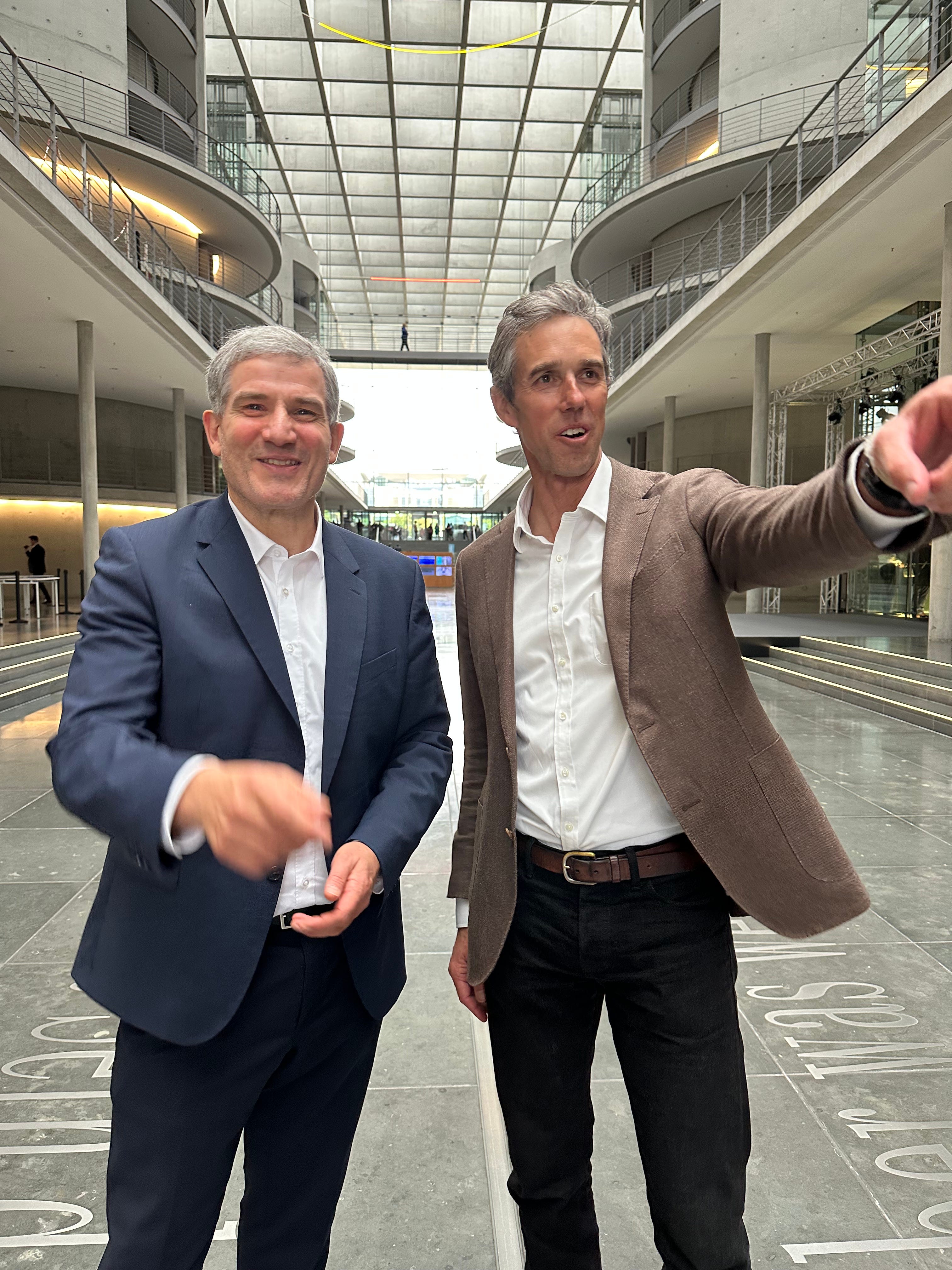
They are trying to apply these lessons to the rise of authoritarian populism in their own time, committing not to ally with AfD, no matter how politically convenient it might be; to address significant economic headwinds before it’s too late; and to shore up provisions in their constitution to keep the Bundestag from being as fractured and feckless as its Weimar predecessor.
One question they had for me: with everything happening in America – the masked ICE agents sweeping Americans off the streets, the President’s illegal defiance of Congress and the Courts, the corruption, the unconstitutional consolidation of executive power — why does it seem as if the American public is OK with what is happening? Why aren’t more people rising up?
I responded that I am seeing extraordinary acts of courage across the country, including in places they wouldn’t expect to find it. Texas Democrats, for example, fought Trump’s gerrymander by breaking quorum and leaving the state at very real personal and political risk. They inspired the country and gave the lie to Trump’s projection of inevitability. Without them, I’m not sure that we’d necessarily see another inspiring example, Gov. Gavin Newsom fighting fire with fire by working to redraw Congressional districts in California in response to Texas.
But while there have been massive protests, demonstrations and rallies, and we are finally seeing Senate Democratic leadership fight back instead of roll over, I had to agree that we must do more.
To that end, I also worked with Democrats Abroad to organize a town hall while we were in Berlin. More than two hundred U.S. citizens and their families joined us for a discussion on the future of America. We had a powerful conversation about Democrats’ opportunity to not only oppose Trump but speak to our ambitions and aspirations. Julia, for example, talked about what it was like to live in a country where health care, transportation and childcare were basic services you could depend on. She challenged us to imagine an America where this would be true as well. Here’s a clip of that exchange:
At the end of the meeting we all committed to voting in this November’s elections (Prop 50 in California, governor and legislature in Virginia and New Jersey and Supreme Court in Pennsylvania, for example) and helping other ex-pats to do the same no matter where they live around the world. And more than that, we committed to doing the necessary and urgent work over the next twelve months to ensure that we win a majority in the House of Representatives and take the Senate as well. I wished my German interlocutors could have been in the room – here are Americans meeting the moment.

The final night was devoted to a public dialog with Anna Lührmann, a member of the German Bundestag. We discussed how our countries were separately dealing with a similar challenge and the opportunity to better coordinate in our pro-democracy work. After all, the cross Atlantic axis of populist authoritarianism is alive and well, with Vance giving encouragement to the AfD, Trump worshipping at the altar of Putin and Orban and Musk stoking the far right across the continent.
Where are our folks? Perhaps we have grown complacent and comfortable in the success of the liberal democratic order over the last 80 years. Maybe it takes this mutual threat at this moment to wake us up, to remind us that we are not alone and that, much as I’ve found in the town halls we’ve held across the country (and now in Berlin), there is strength in numbers, purpose in our unity and the real possibility of victory through our action.
Besides, what’s the alternative? To give in, to give up, is to become complicit in our own undoing. Two-hundred and forty-nine years in, we’re not about to dishonor the service, struggle and sacrifice that came before, nor will we deny the greatness of our country to the generations to come. After all, as one conservative member of the Bundestag put it to me, “America liberated our country from fascism. How could we ever believe that you would submit to it yourself?”
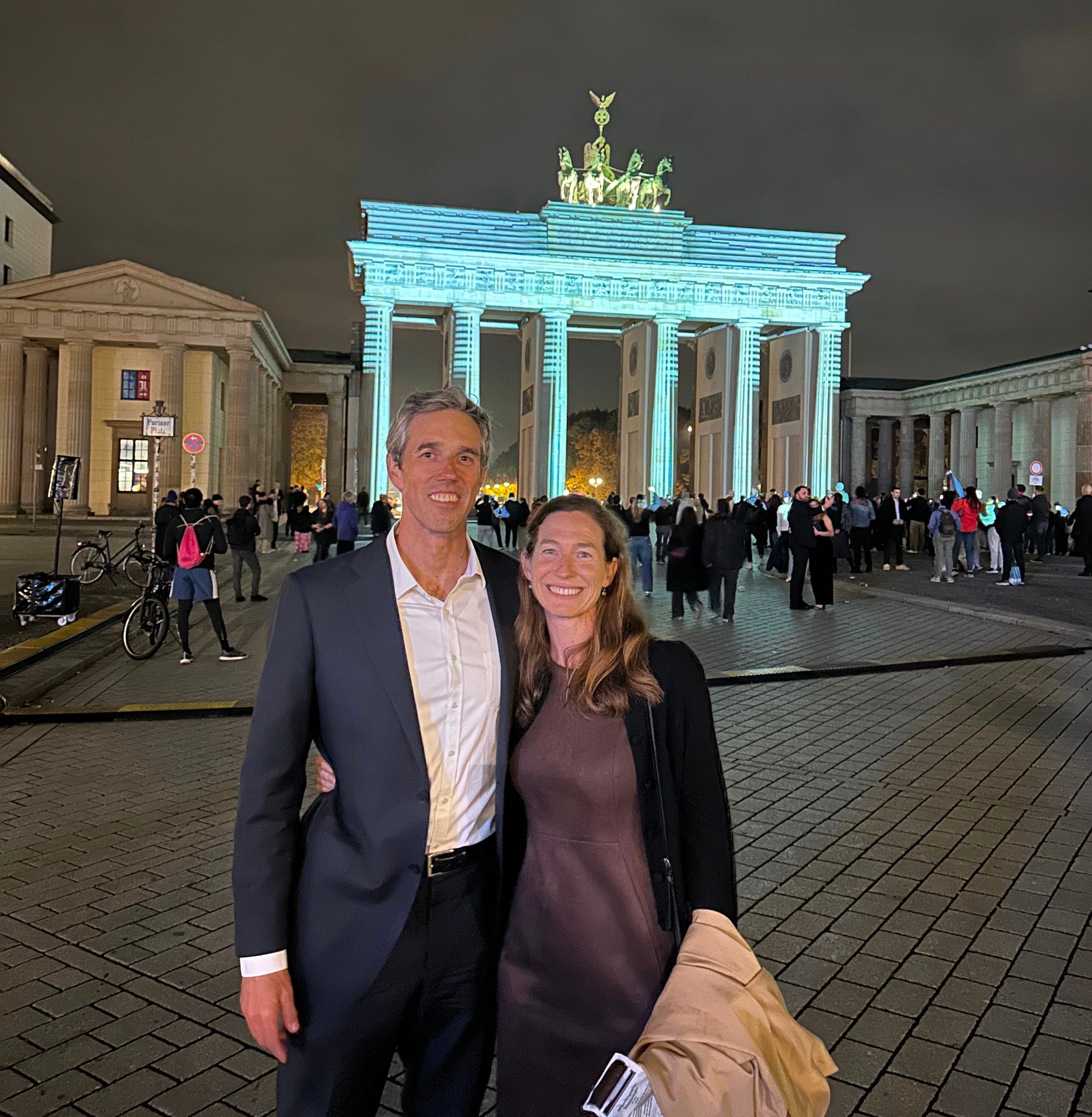
After the event and time spent thanking our hosts and talking with guests of the conference, Amy and I walked back to our hotel, passing through the Brandenburg Gate, lit up for the festival of lights. One last night in Berlin before heading back home to the work before us.
This is so excellently written Beto, so thought provoking. Topography of Terror Museum? Oh my, the name itself is enough to send chills down one’s spine, so I can only imagine the experience itself. I’m so glad you and Amy had these experiences together. Thank you so much for this, you are one of my all time heroes. Supporting you always, from Vancouver 🇨🇦
The greatest distinction between the Nazi demonization of anything and everything not like them and MAGA is that the latter is not popular. Yes, I realize one-third of those eligible to cast votes in both 2020 and 2024 chose a criminal con man without brains or heart, but who these wretched people are and what they stand for simply does not resonate with the majority of us.
If that were not true, they wouldn't constantly be trying to gerrymander, to play games with the vote and try to suppress it, to divert people's attention from economics and real policy challenges to non-existent cultural issues like a wee minority of individuals seeking to change genders and gender identification. And real issues like immigration would be discussed without references to "vermin" or Haitians eating cats and dogs. That tells you how absurd this all is.
Just yesterday, 7 million people took peacefully and joyfully to the streets in thousands of communities all over America -- many in beet-red states and counties -- to protest our descent into their madness. In response to the snarling, asinine lies of our idiot collaborator-Speaker and assorted Republican toads who still think their future involves licking his nether parts, they laughed, they scorned, they dressed up like frogs and unicorns, and they danced. Try as I remember, I can't recall that many Germans greeted Hitler dressed as T-Rexes in order to make fun of fascism.
Maybe had more people laughed at the Nazis rather than accepted their twisted take on history and truth, there wouldn't have been a later need to build a Topography of Terror Museum in Berlin. Maybe, if we keep pushing back on the stupid Rube Goldberg contraption of idiocy and lies that sums up our current, criminal, lawbreaking enterprise in Washington, there will be no need to build one in Washington either.